Since this is the first post, I'd like to start by explaining why I vote Buchla.
The Buchla 200 is the best modular electronic instrument ever made.
1. Don Buchla designed the front panel of his instruments first and the electronics second. A musician himself, this means that each module was an idea for a musician's tool rather than an engineer's.
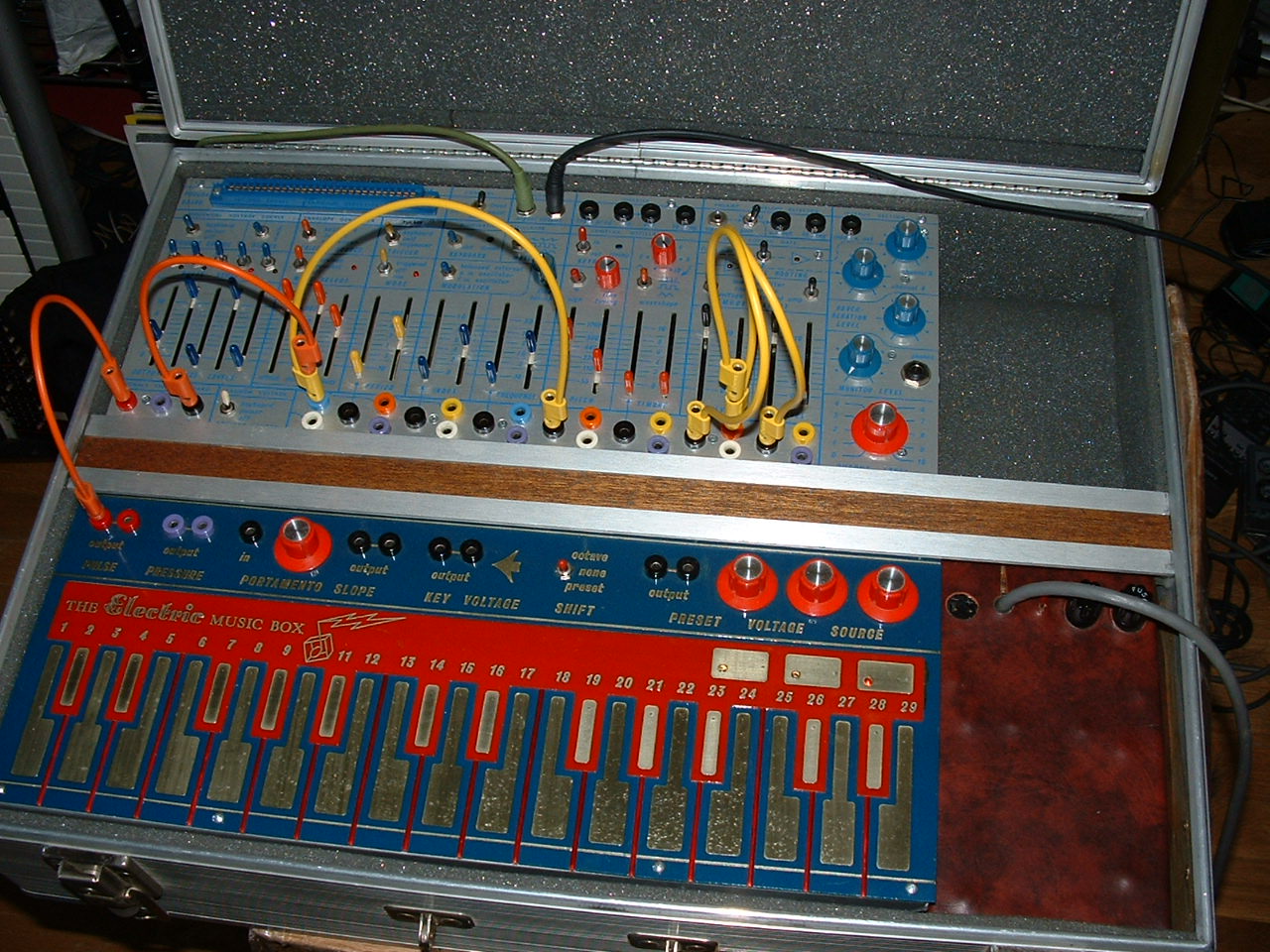
2. Audio paths and control paths are totally divided. The control path uses unshielded stacking banana cables. The audio path uses 1/8" mini cables. On early modules the control paths and signal paths even used separate power rails! The audio signals are line level, just like all the signals in a recording studio, so patching in and out of the system is seamless. The stacking bananas are great for control signals, they mult simply. The EF Johnson banana jacks come in a variety of colors, which Don used to code what the jacks are used for.
3. Controls sweep within a musically useful range. This is in some ways related to #2. Because audio processing modules never have to concern themselves with CV signals and vice versa, the controls don't have half of their rotation representing useless values, like a Serge.
4. "Unencumbered by engineering expediency or presumed musical asthetics..." Taken from the 248 catalog page.
5. Circuit boards are all mounted parallel to the panel, making the system take up less space behind the panel than most modulars. This allows for the suitcase cabinets and folding 203 cabinets. I will never understand the MOTM/Moog/Blacet/whatever system of mounting PCBs sticking way out back.
6. Sound design emphesis taken away from "fat" and "juicy" 24dB/Oct. lopass type sounds and into more interesting textures. Sure, you can do FM, AM, whatever audio rate modulation on any modular, but Buchla really pushes the user that way. The 259 has a switch and VCA internally patched for FM. It has a dedicated modulation oscillator!
7. Analog address of sequencers. Most of the time a sequencer is simply going to be pulsed along linearly. But having the CV in to sweep through the range of steps allows the sequencer to be used in several new ways including as a quantizer, tracking generator and more.
8. Harmonic Generator. No other modular ever had an oscillator module with the first 10 harmonic sine waves available. Don updated his 148 module for the 200 series too, but only made 2 as far as I know.
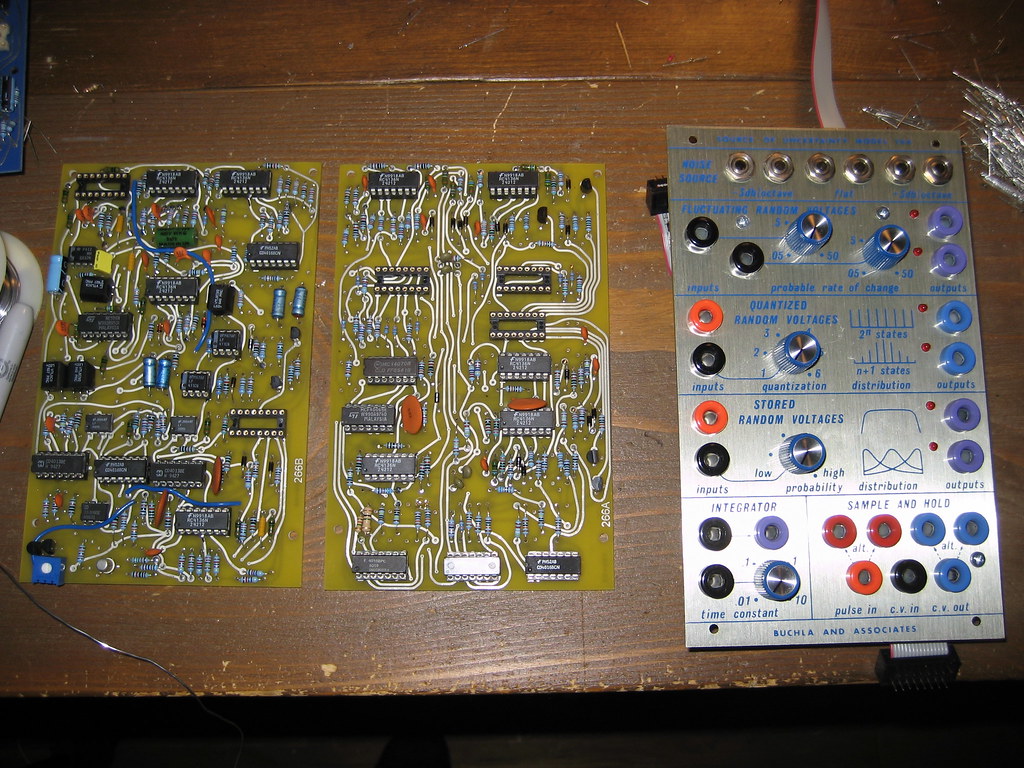
9. Source of Uncertainty. These days, all modulars have noise and sample & hold modules, but nobody ever made so many specific and musical options available to make sounds randomly shift and evolve. All hail the 266!
10. Quadrature mode on the 281. After a while, the ADSR became
de facto for the whole of the synth industry. The 281 module allows all of the modes on a 284 or a 280 to be achieved, with voltage control of each stage. It's the quad mode that allows a quadrature LFO to be created, for quad panning or whatever. However, this mode can also be used to creat ADSR and DASR envelopes. I like the ADSR that you get from this because it follows through the whole decay and release cycles, even when it only gets a short pulse.
11. "Timbre." No, I don't mean the sound of the machine, at least not in this case. I mean the "timbre" circuit that is inside the 208 and the 259. It involves wave folding similar to the Serge wave multiplier (totally different circuit) attached to the sine wave output from the oscillator. The 258 already had the ability to sweep from a sine wave to either a saw or square wave, which is a bit like lopass filtering. A sweep of the "timbre" sounds unlike any other synth and is amazing.
12. Voltage Controlled Panning. The 207 allows 2 channels to be sweeped around via a CV. The 227 and 204 allow quad panning from 2 CVs. Simple yet wonderful.
13. Tunable Touchplate Keyboards. Those users who have no interest in playing a piano keyboard can rig up a 217 to do lots of things that no other system has ever allowed.
14. VTL5C3. The vactrol used in the 292 lopass gate has a characteristic slew to it. It makes the attack of any note from a Buchla 200 a little round. The "woodiness" of the sound is a key reason that the Buchla's sound has been discribed as natural.
I'm sure there are more reasons that will come to me as soon as I post this, but it will do for now.
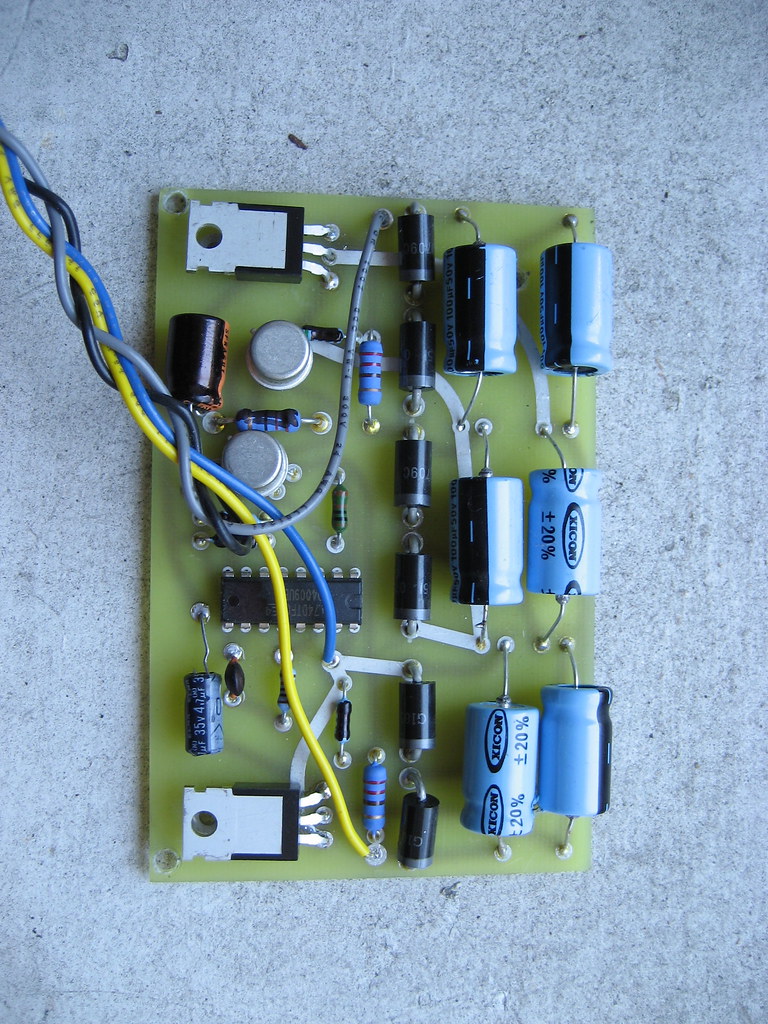 Here is the original.





 Posts
Posts

